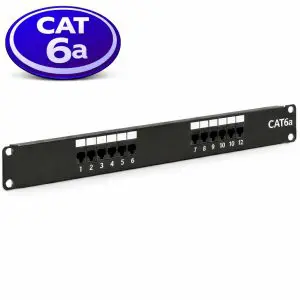
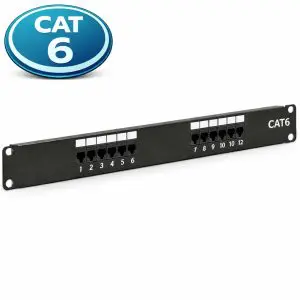
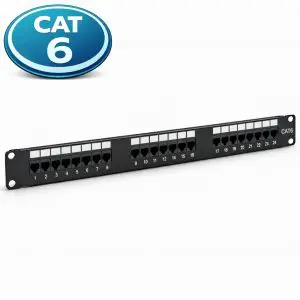
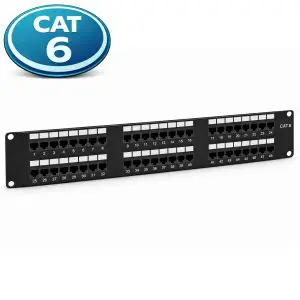
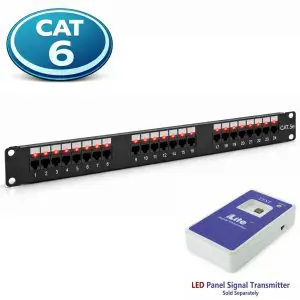
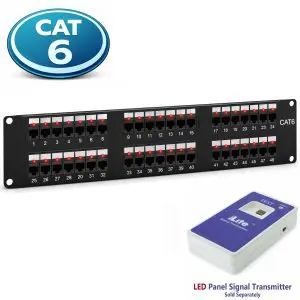
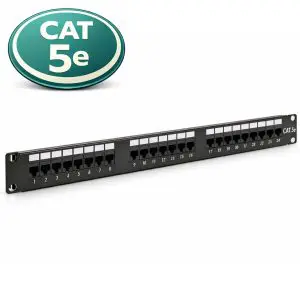
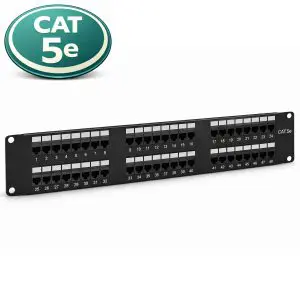
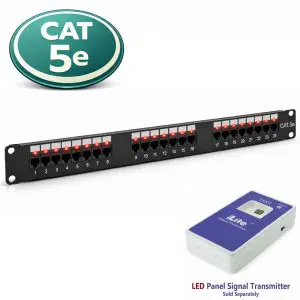
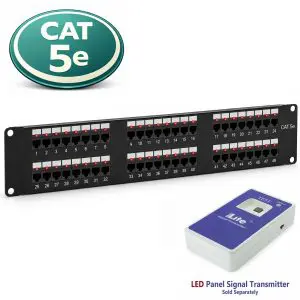
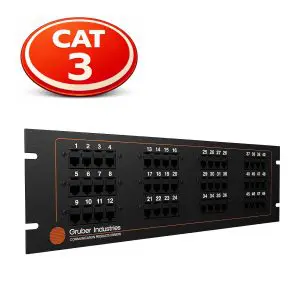
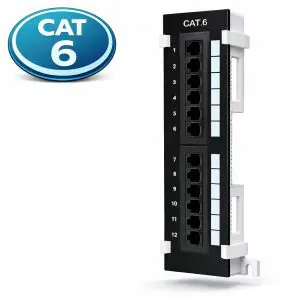
This category is dedicated exclusively to Category patch panels used in data communications applications. These panels provide a clean, efficient way to organize, terminate, and manage structured copper cabling in telecom rooms, equipment racks, wiring closets, and data centers. Covering Category 3, Category 5, and Category 5e systems, this category focuses on the patching hardware that supports reliable voice and data distribution while keeping installations neat, scalable, and serviceable.
Gruber Industries is the originator of the first-generation high-speed Category patch panels in the data communications field, helping establish an early standard for organized, high-performance copper patching in structured cabling systems. That legacy continues in this category through practical, installation-focused designs built for dependable long-term service.
Showing all 16 results


| Telecom Rooms & Wiring Closets | Organized presentation and management of horizontal and backbone copper cabling. |
| Commercial Voice & Data Networks | Rack-mount patching for office phone systems, LAN infrastructure, and structured copper distribution. |
| Cross-Connect Fields | Centralized patching environments that require clear labeling, organized terminations, and service-friendly layouts. |
| Legacy & Transitional Infrastructure | Support for existing Category 3, Category 5, and Category 5e systems still in operation across commercial facilities. |
Performance Comparison Guide
This reference table helps identify the most common data communications patch panel categories used in structured cabling systems, from legacy Category 3 up through
Category 8. While a patch panel itself is a passive component, each category is designed to support a corresponding level of network bandwidth, signal integrity, and Ethernet application performance when used as part of a properly matched cabling channel.
| Category | Rated Bandwidth | Typical Ethernet Support | Maximum Channel Distance | Shielding / Connector Notes | Common Use / Performance Notes |
| Category 3 | 16 MHz | 10BASE-T, voice, low-speed legacy data | 100 m (legacy voice / 10 Mb applications) | Typically UTP; legacy punch-down style hardware | Best suited for older voice and legacy LAN infrastructure; not used for modern high-speed data networks. |
| Category 5 | 100 MHz | 10/100BASE-T; early Gigabit use in limited cases | 100 m | Usually UTP with RJ45-style connectivity | A legacy data category largely replaced by Cat5e for newer installations. |
| Category 5e | 100 MHz | 10/100/1000BASE-T | 100 m | Usually UTP; standard RJ45 patching hardware | A common baseline for modern Gigabit Ethernet and general office network cabling. |
| Category 6 | 250 MHz | 10/100/1000BASE-T; 10GBASE-T on shorter runs | 100 m at 1 Gig; shorter distances for 10 Gig | Available in UTP and shielded forms; standard RJ45 common | Offers improved crosstalk and performance margin over Cat5e for higher-quality copper networks. |
| Category 6A | 500 MHz | 10/100/1000BASE-T and 10GBASE-T | 100 m | UTP or shielded; standard RJ45 commonly used | A popular choice for full-distance 10 Gigabit Ethernet and higher-performance structured cabling systems. |
| Category 7 | 600 MHz | 10 Gig class applications | 100 m | Typically fully shielded; often associated with non-RJ45 ISO Class F style systems | More specialized than Cat6A and less common in standard North American RJ45 patch panel installations. |
| Category 8 | 2000 MHz | 25GBASE-T and 40GBASE-T | 30 m | Shielded system; used for high-speed data center copper links | Designed for short-reach, very high-speed switch-to-server and data center applications rather than typical office horizontal cabling. |
When selecting a rack-mount patch panel, the most important considerations are the
required Ethernet speed, the intended channel distance, future
bandwidth growth, and whether the installation calls for shielded or unshielded copper infrastructure.