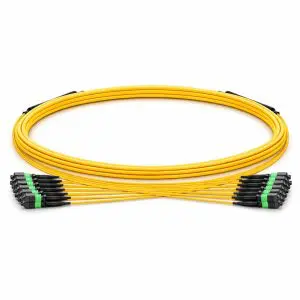
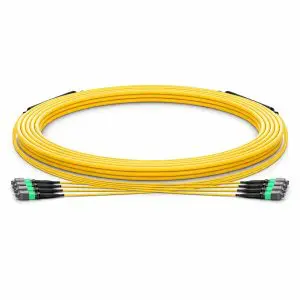
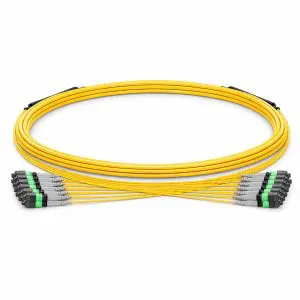
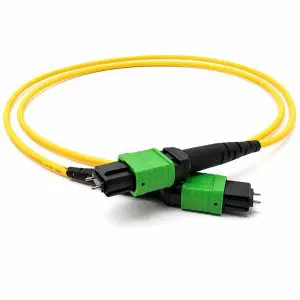
| MPO |
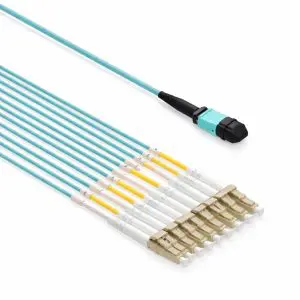
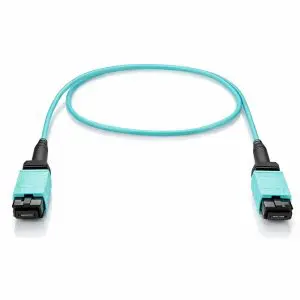
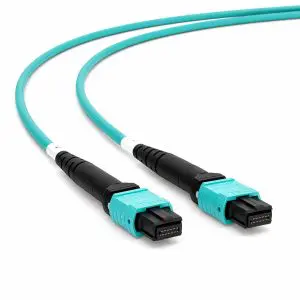
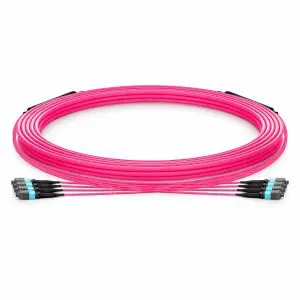
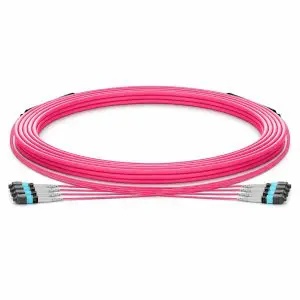
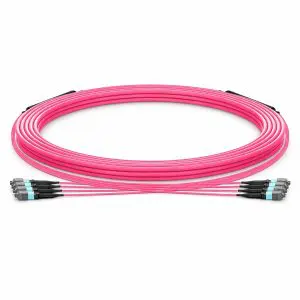
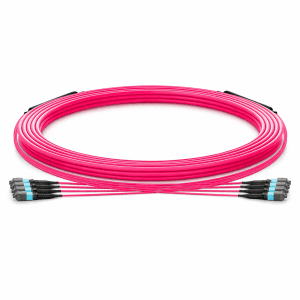
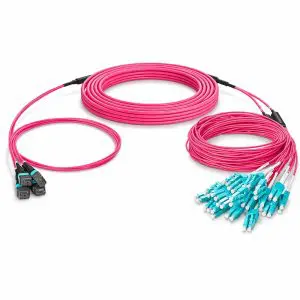
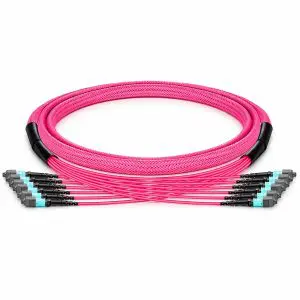
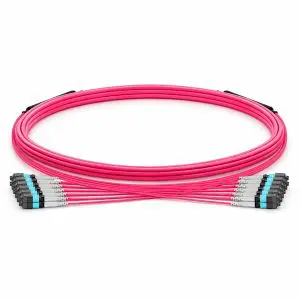
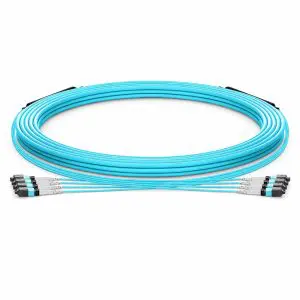
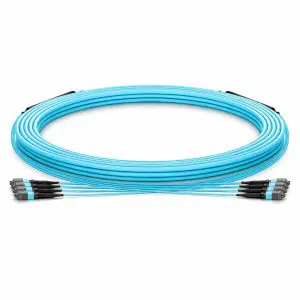
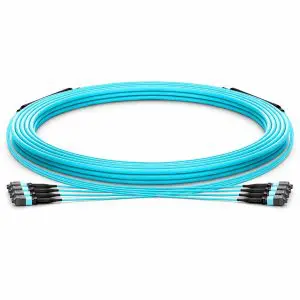
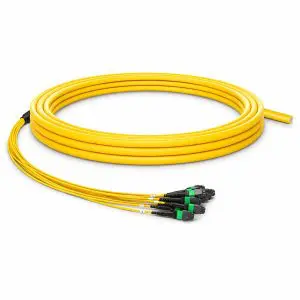
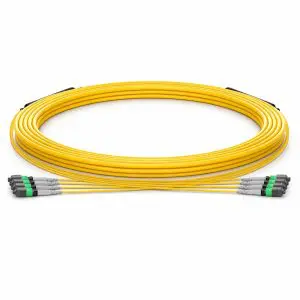
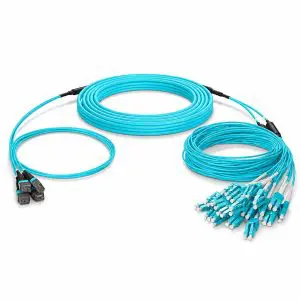
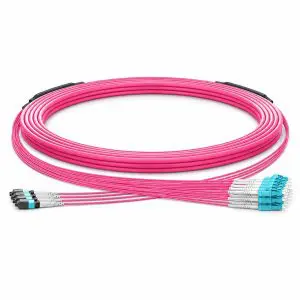
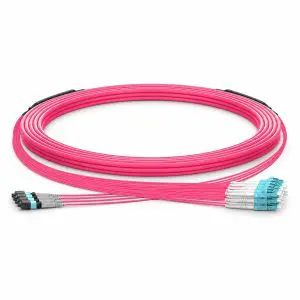
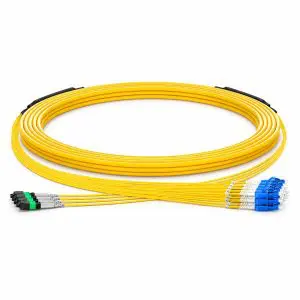
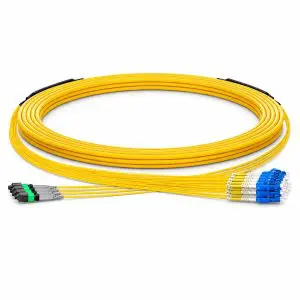
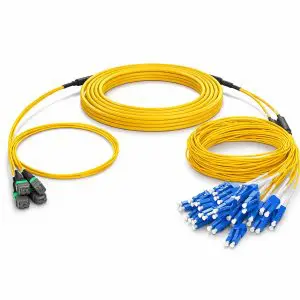
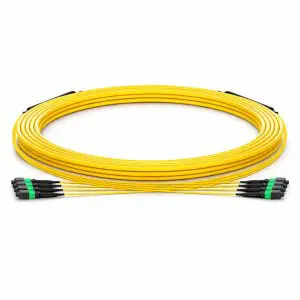
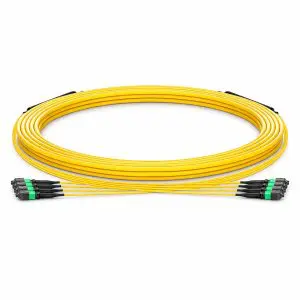
Multi-fiber push-on connector standard used to carry multiple fibers in one compact interface. |
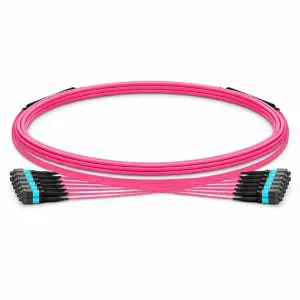
Widely used in high-density fiber systems, trunk cables, cassettes, and breakout assemblies. |
| MTP |
A premium MPO-compatible connector design with tighter tolerances and improved performance. |
Often preferred where low loss, repeatability, and high-speed fiber performance are important. |
| Singlemode |
Fiber with a very small core designed for long-distance, high-bandwidth transmission. |
Common for backbone, telecom, campus, and longer-reach network links. |
| OM3 / OM4 / OM5 |
Multimode fiber grades used for higher-speed short-to-medium distance optical links. |
Common in data centers, parallel optics, and shorter-reach transceiver applications. |
| OS2 |
The most common designation for singlemode telecom-grade fiber. |
If a cable is listed as singlemode, it is often OS2 unless otherwise specified. |
| APC |
Angled Physical Contact polish on the fiber endface. |
Helps reduce back reflection and is common in many singlemode applications. |
| UPC |
Ultra Physical Contact polish with a flat or slightly domed endface. |
UPC and APC are not interchangeable and must be matched correctly. |
| 12F / 24F / 48F |
Fiber count inside the cable assembly, such as 12 fibers, 24 fibers, or 48 fibers. |
Determines the cable capacity and what cassettes, trunks, and breakout methods it supports. |
| Method A |
A common MPO polarity method where fibers align straight through from end to end. |
Correct polarity is essential so transmit and receive paths land where they should. |
| Straight Through |
Indicates the fibers maintain positional order from one connector end to the other. |
Important for pairing trunks, cassettes, and polarity plans properly. |
| OFNR |
Optical Fiber Nonconductive Riser fire rating for vertical runs between floors. |
Suitable for many riser applications in commercial buildings. |
| OFNP |
Optical Fiber Nonconductive Plenum fire rating for air-handling spaces. |
Required where plenum-rated cable is needed by code. |
| MP3 / MP4 |
These terms do not apply to fiber optic cable or connector specifications. |
The correct specs are fiber type, connector style, polish, polarity, fiber count, and fire rating. |