Neutrik etherCON® Assemblies: Unlock
In professional live events, broadcast production, and mission-critical networking, the quality of
Learn More →

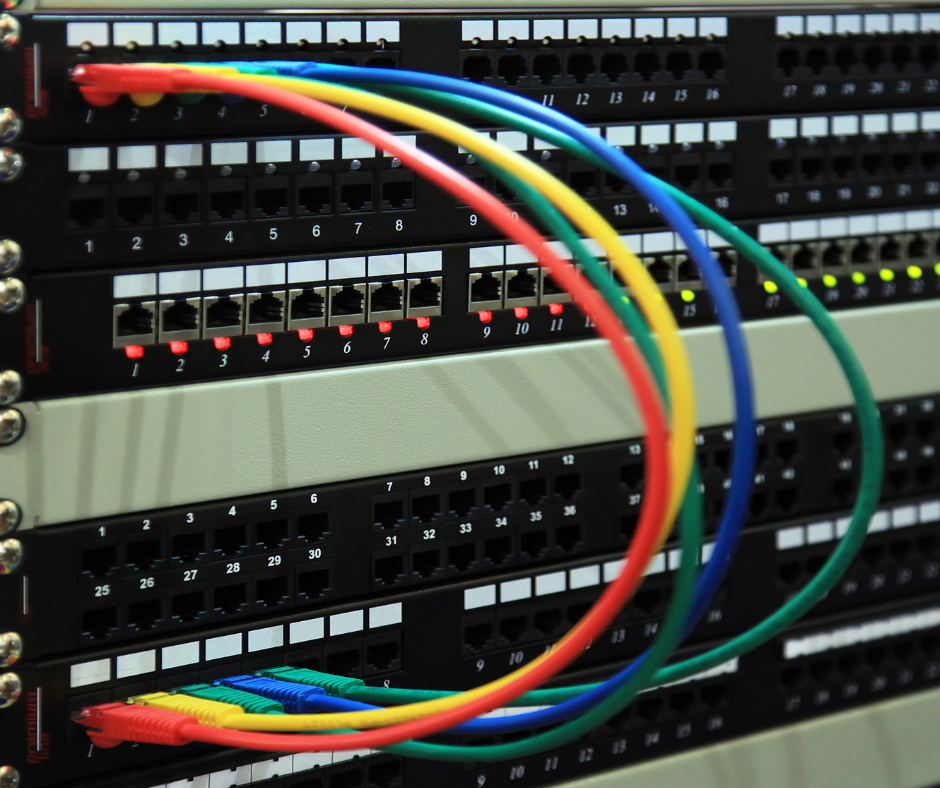
Efficiency and organization have become essential in modern networking, whether for data centers, corporate offices, or smart residential environments. The patch panel is a key component that ensures this. In structured cabling systems, patch panels are vital because they enable easier management, enhance reliability, and support scalability, despite often being overlooked. IT staff can quickly locate, connect, or reroute connections without disrupting the network, as these panels serve as a central point where all incoming and outgoing network cables converge.
Patch panels help reduce errors, accidental disconnections, and downtime by streamlining cable management and offering a clean, labeled interface. They also support future growth by making it easier to add, move, or modify connections as the network expands. Patch panels improve network performance, simplify troubleshooting, and add to a polished, well-organized infrastructure in both small office settings and high-density data centers.
A patch panel is a centralized, mounted unit (usually rack-mounted) that houses a series of ports, typically ranging from 24 to 48 ports. These ports act as a stationary, physical interface for the network’s low-voltage cabling.
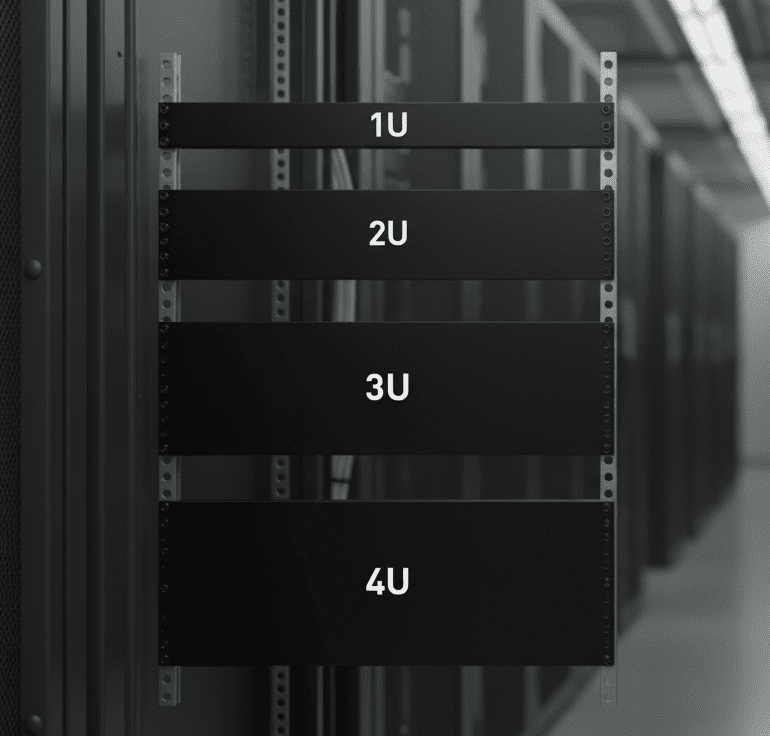
Patch panels come in various sizes, usually 1U, 2U, or 3U, depending on the number of ports needed. They are usually mounted in conventional 19-inch racks. Every port on a patch panel is connected to a cable that comes from a device or workstation. To create a structured and organized network setup, these ports are then connected to routers, switches, or other networking equipment via short patch cords. This facilitates troubleshooting, improves cable management, and offers documentation hardware for data routing.
Use patch cables: Short patch cables are used to bridge the connection between the patch panel and the switch.
Final Connection: One end of the patch cable is connected to the front port of the patch panel, and the other end is connected to the uplink port of the switch.
Flexibility: This setup allows you to easily move the connection to a different switch port, all by simply moving the short patch cable.
Centralized Organization and Management:
Protection for expensive equipment:
Better flexibility:
Reduced downtime:
Simplified troubleshooting:
Scalable and future-ready:
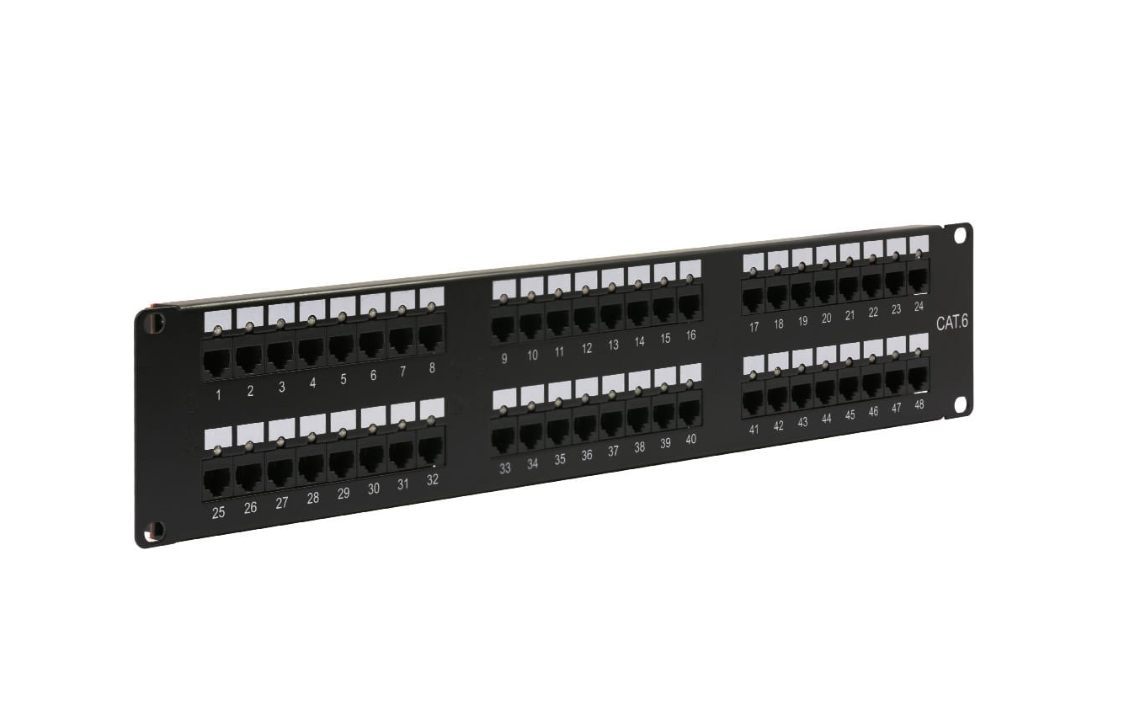
Ethernet Patch Panels: These panels are specifically designed for Ethernet applications such as Cat5e, Cat6, and Cat6A, providing a reliable and organized solution. They are commonly used in local area networks (LANs) to streamline data communication between equipment. They can support high-speed data transmission and handle the increased bandwidth demands of modern networks, making them suitable for a large data center or a small business setup.
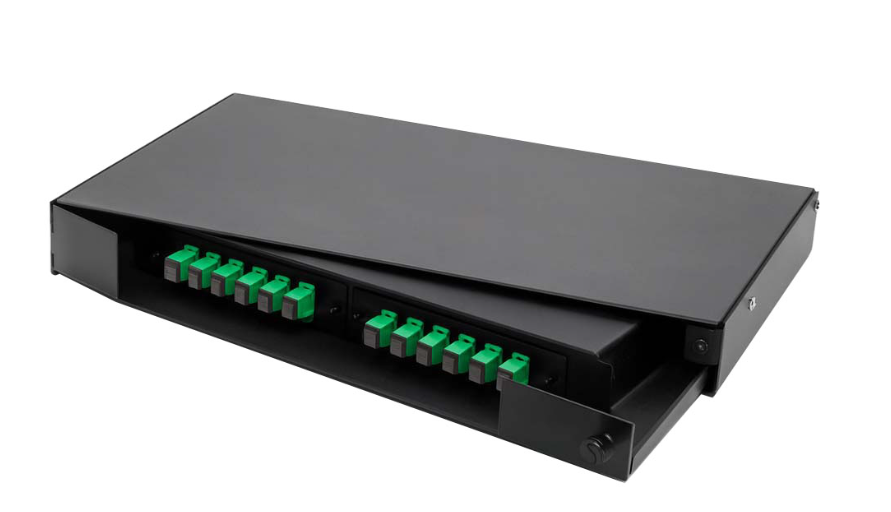
Fiber Optic Patch Panels: These panels manage and organize fiber optic cables in the structured cabling system. Fiber optic cable transmits data and light signals. These panels provide a centralized location and ensure high-speed, reliable data transmission, eliminating signal loss. They come in different configurations, including single-mode and multi-mode options, and are usually terminated with connectors such as LC, SC, FC, ST, and MPO, depending on network requirements. These panels are mainly used in data centers, telecom, and enterprise networks, where they require high bandwidth.
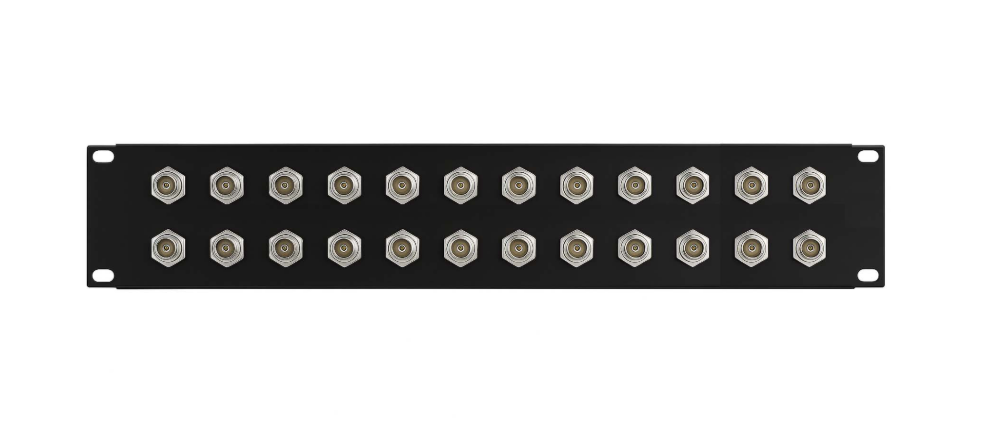
Coaxial Patch Panels: These are a type specifically designed to manage, organize, and route multiple coaxial cable connections to a centralized point. Coaxial cables are used for CCTV, TV, satellite, radio frequency, and broadband internet applications.
|
Setting |
Purpose |
|
Data Centers & Telecom Rooms |
To easily connect and move thousands of network lines between computers, servers, and switches without having to rewire a permanent cable every time. |
|
Broadcast & AV Systems |
To quickly change how audio, video, and lights are connected during a production or show. |
|
Industrial & Corporate Offices |
To manage the network for machines, sensors, or office computers so that when something moves or breaks, you can fix or reroute the connection instantly. |
| ISPs & Carriers (Fiber Optic) |
To cleanly connect and manage the delicate, high-speed fiber optic cables that bring the Internet to entire neighborhoods. |
Gruber Communication Products focuses on the manufacturing of custom cable assemblies and providing end-to-end connectivity solutions, & this capability extends directly to patch panel implementation. Whether your project involves voice, data, RF, or specialized audio/video, Gruber has a precision-built solution. Our range is comprehensive, featuring essentials like BNC, CATV F-Connector, DB-style, Telco, and versatile Keystone panels, alongside custom-designed solutions.
From a high-density data center to a complex AV suite, laboratory, or specialized test environment, choosing Gruber means choosing panels built for the long haul. You get the quality and assurance that come from decades of leadership in the field. For the full catalog of our products and services, please visit our website: Home – Gruber Communications. Please call us at 800.658.5883 or 602.863.2655 or email support@gruber.com.
In professional live events, broadcast production, and mission-critical networking, the quality of
Learn More →
Efficient cable management is essential in today’s data centers, telecom rooms, and
Learn More →