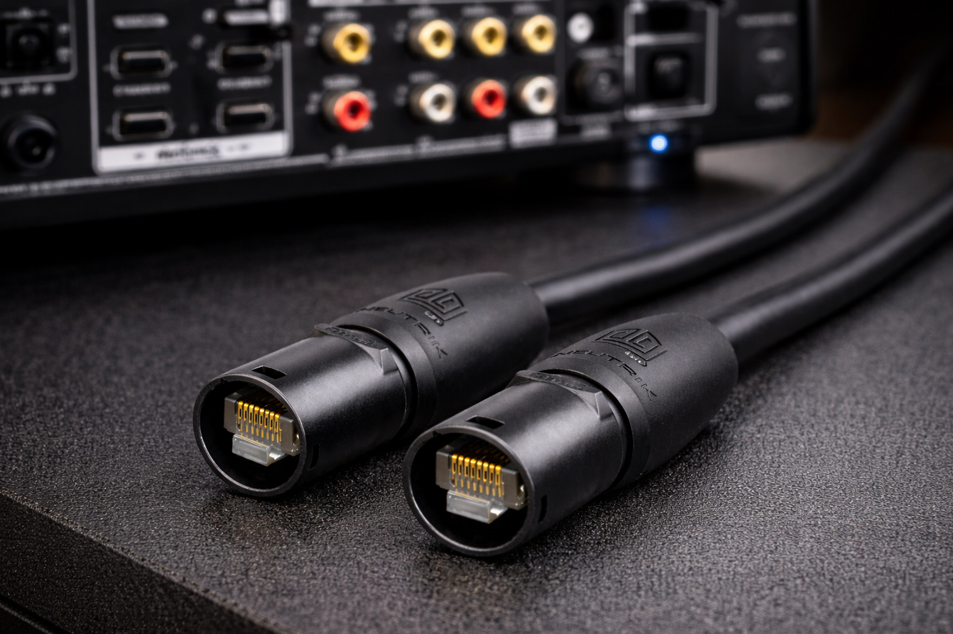
Neutrik etherCON® Assemblies: Unlock
In professional live events, broadcast production, and mission-critical networking, the quality of
Learn More →

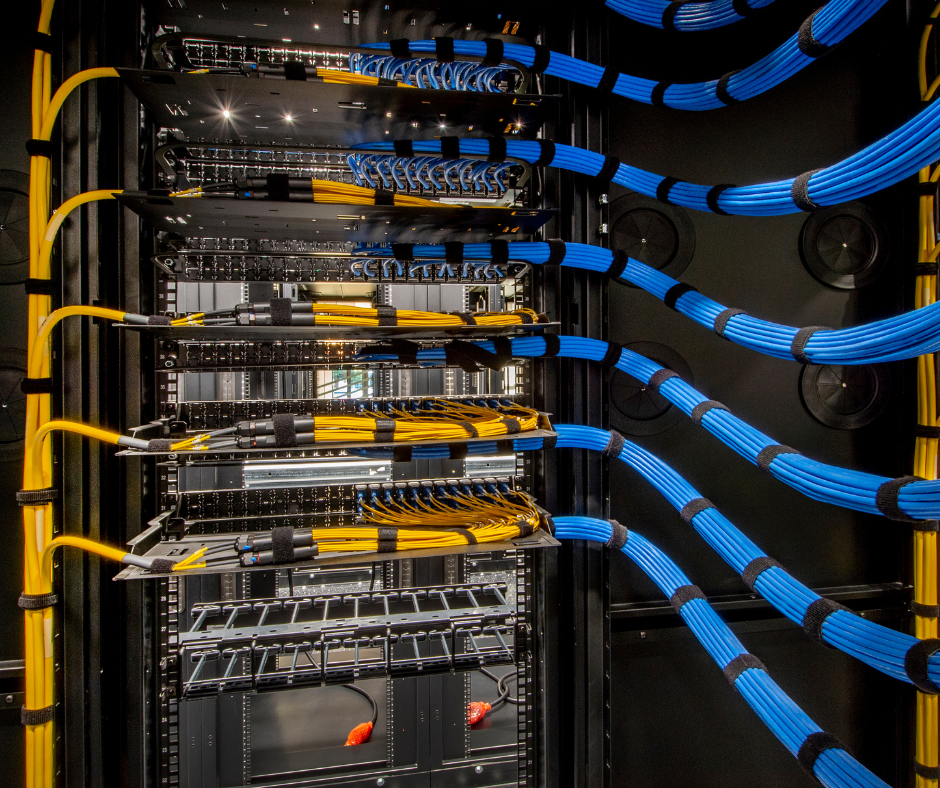

Everyone hates a messy, unorganized cable cabinet; it makes maintenance difficult and can often create safety issues. That’s where cable management tools come in. Cable management is essential for organizing and supporting optical or electrical cables, whether in a home or a business setting, regardless of size. Integrating cable management systems will simplify repairs and create a safer, more efficient setup.
There are many common cable management tools, including panels, finger ducts, lacing bars, distribution rings, and cable ties. In this article, we’ll focus on the different types of lacing bars that are used in cable management. At Gruber Communication Products, we work with many customers who rely on lacing bars to keep their racks neat and efficient.
A lacing bar, also commonly referred to as a towel bar, is a metal bar installed on a rack or cabinet to organize and support cables neatly. It’s typically the same width as the rack or cabinet and has pre-drilled holes for mounting screws. Lacing bars can be installed horizontally or in taller racks, vertically alongside the rails to provide additional cable support and maintain proper cable management.

This is a highly efficient and cost-effective solution for cable management. It supports your cable assemblies, avoids strain on connector ports, and makes maintenance easier, minimizing system downtime. By distributing the cable weight evenly, it also helps to reduce tension on individual cables. Cables are secured to the bars with ties, allowing them to be bent smoothly without exceeding the bend radius, which can help to improve the air flow. These bars are easy to install, maintain, or replace, and can be used for small to large businesses. Lacing bars can be mounted on a backboard. They are also a very cost-effective cable management solution.
Shape: A flat, straight steel or aluminum bar that is mounted horizontally between the rack posts.
Use: Mainly used for cable management in cabinets or racks of data centers or network enclosures. This bar can support fiber optic jumpers, patch cables, power cords, or bundled wiring and is placed directly behind panels, switches, or servers.
Advantages:
Common variations:
Shape: Bent 90 degrees along its length
Use: The main benefit of using this lacing bar is that it provides a great amount of clearance and supports the entire structure. This bar also moves the cable support point closer or even away from the rear of the rack, depending on its direction of bend. It can be used for high-density cables and for equipment that’s rear-facing.
Advantage:
Variations
Shape: The bar is angled at a 45-degree angle along its length
Uses: Create space for the cable to run from the front to the rear of the rack
Advantage:
Variations:
Shape: A cylindrical rod instead of a bar.
Use: Used for low-density cable applications like small bundles or single cable runs/patch cords.
Advantage:
Variation:
Shape: The flat steel/aluminum bar is bent at a right angle along its length; the horizontal side serves as the cable support.
Use: L-shaped lacing bars are used to support multiple cables and route cables into racks or cabinets, especially where cables need to be guided around equipment or corners.
Advantage:
Variation:
Shape: These panels are flat and wide with multiple drill holes
Use: They are used to manage large bundles of cables using wide flanges and numerous tie points.
Advantage:
Variation:
Effective cable management relies heavily on lacing bars, offering a cost-effective solution to keep rack cabinets organized. Proper cable management improves airflow, simplifies troubleshooting, reduces downtime, eases maintenance, allows additional cables to be added without issues, and minimizes strain and stress on cables, extending their longevity. Beyond aesthetics, it enhances safety, performance, and overall reliability.
Gruber Communications Products offers a wide range of cable management solutions, including lacing bars, cable management panels (horizontal and vertical), finger duct panels, and cable management rings, all backed up by a lifetime warranty that ensures smooth and reliable operations. Custom solutions and bulk orders are also available to meet your specific needs.
Let’s plan an optimal lacing layout for your next upgrade. Call us at: 800.658.5883 or 602.863.2655 or email. Visit our website for more information: www.grubercommunications.com.
In professional live events, broadcast production, and mission-critical networking, the quality of
Learn More →
Efficient cable management is essential in today’s data centers, telecom rooms, and
Learn More →