Cable Management
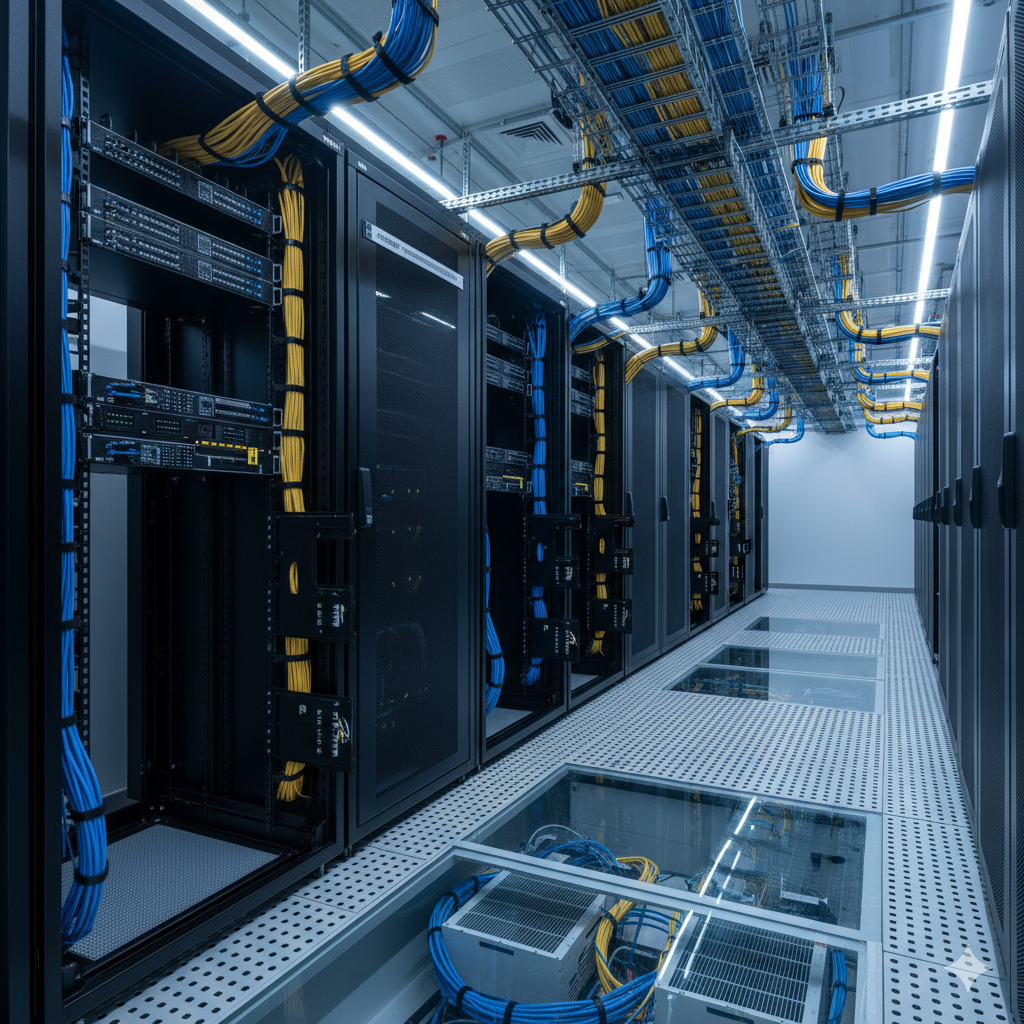
Data centers and server rooms are the hub of business in the digital age, holding the vital IT hardware that drives everything from daily operations to cloud services. These high-density environments produce massive amounts of heat; thus, effective airflow and cooling management are not just best practices but also critical requirements for system performance, longevity, and cost control. Advanced cooling systems are frequently the center of attention, but effective cable management remains important and profound in maximizing airflow and total thermal efficiency.
Cable Clutter Consequences:
When cables are left tangled in the ‘spaghetti’ mess within the server and racks and under the raised floor, they can cause a major obstruction. Imagine trying to breathe through that spaghetti mess of cables—difficult, right? That’s what the cooling air is up against, which can lead to several critical issues.
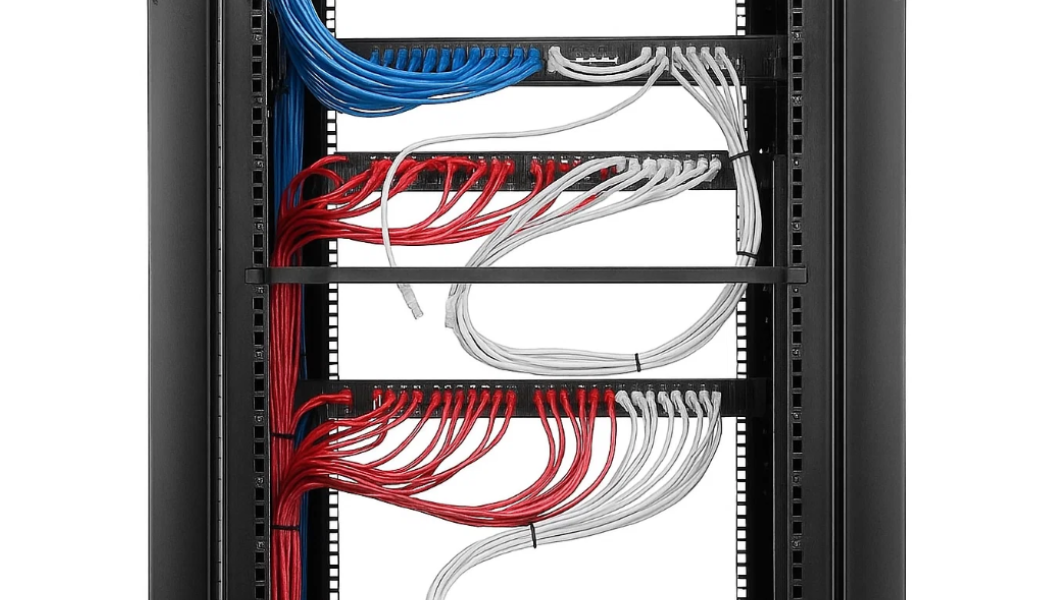
- Block Intake and Exhaust: Dense cable bundles inside a server cabinet may partially or totally limit the exhaust fans’ ability to discharge hot air or the intake ports for cool air. This results in interior hot spots and early failure by making the equipment operate harder and less effectively.
- Bypass airflow: A room using a raised floor for the distribution of cooling air with large or unsealed openings creates an opportunity for the cooling air to escape through these openings instead of going through the equipment inlets. This can lead to wasting cooling capacity and affect the efficiency of the entire system.
- Air dams and turbulence: Under the access floor, unorganized cables can act as air dams, blocking the supply of cold air, creating a pressure difference, and causing turbulence.
- Safety Hazards: Can create safety hazards in areas where cables are clustered and can create electric fires or overheating and even short-circuit. the
- Performance and connectivity issues: Overheating from blocked airflow causes equipment to lower the thermal throttle, which lowers speed, or malfunction occasionally. Unsecured or stressed cables result in loose connectivity and signal loss, while tight bends deteriorate signal quality.
- Risk of downtime: Increased component failure due to heat stress, combined with human error, can result in frequent and prolonged unplanned outages.
- Maintenance and troubleshooting issues: Severely extended Mean Time to Repair (MTTR) because technicians struggle to trace faults, and thick cable bundles physically obstruct access for routine maintenance, which can make the process expensive.

The Solution: Cable Management as an airflow catalystÂ
Effective cable management has several advantages that enhance performance, safety, economy, and efficiency in every setting, from a home office to a massive data center.
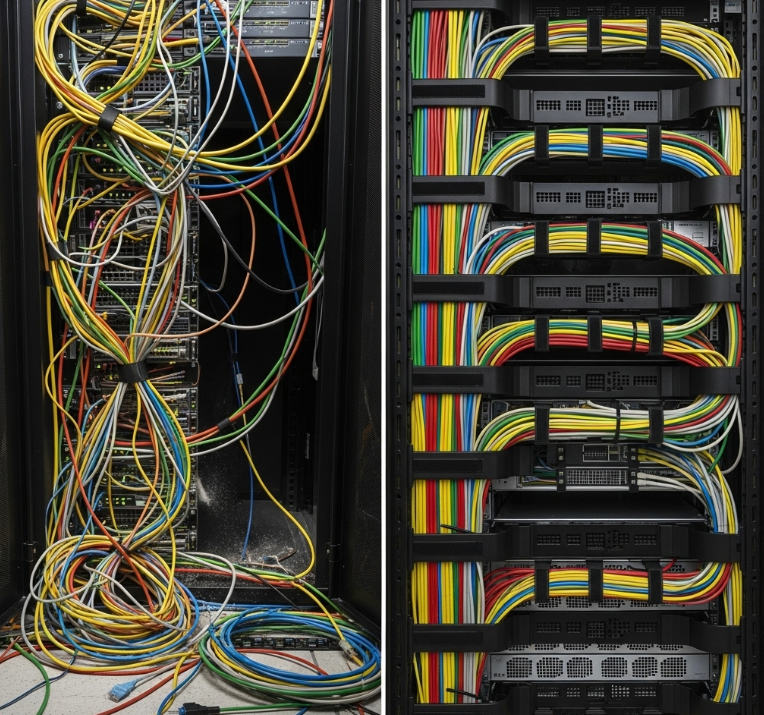
- Better Cooling and Airflow: Well-organized cables don’t obstruct vents or limit airflow. This practice keeps devices from overheating, helping to ensure networking components continue to operate at peak efficiency and prolonging their MTBF.
- Decreased Crosstalk Signal Interference: By keeping power and data/network cables apart, electromagnetic interference, which can cause data errors, sluggish network speeds, and connection problems, is reduced.
- Increase Equipment Life: Supported, free of kinks, and tension-free wires are less likely to wear down, fray, or sustain internal damage, safeguarding the cables and the equipment they are linked to.
- Faster troubleshooting: Technicians can quickly determine which cord goes where; all circuits are properly routed and (preferably) labeled at both ends. This significantly reduces the amount of time required to identify and resolve a problem.
- Decreased Downtime: Prompt troubleshooting results in less system downtime, which keeps productivity high and saves the company money.
- Simpler Upgrading and Maintenance: Equipment addition, removal, and replacement are made easier by a clean system. You don’t need to untangle or break other connections to work on specific components.
- Decreased Fire Hazard: By avoiding tight bundles and preventing heat accumulation, proper routing lowers the risk of electrical shorts and fire.
- Professional Appearance: A neat and orderly workstation or server rack conveys professionalism and organization, which is critical for locations where clients are present and for boosting staff morale.
- Enhanced Physical Safety: Power distribution involves large, heavy-gauge cables (think AC input and DC output / large battery bank connections). Unmanaged power cables lying on the floor or dangling from racks are massive tripping hazards for technicians, especially when they need to quickly access equipment during a power event. Cable trays, ladder racking, and vertical/horizontal managers keep these bulky cables routed securely overhead or within the cabinet structure.

Conclusion:
Custom metal manufacturing and precision cable management provide the structure and discipline essential for complex IT and industrial systems to perform at their peak. By integrating well-designed metal components with organized cabling, what could otherwise become a tangled or inefficient setup transforms into a reliable, high-performance environment.
Gruber Communication Products offers cable assemblies, cable management systems, and specialized, long-lasting, and specially designed metal solutions that improve ventilation, heat dissipation, and overall system efficiency. With more than 35 years of experience in cable assembly and custom metal fabrication, we provide professional knowledge and solutions that are suited to the exacting needs of contemporary manufacturing, industrial, and IT installations. Contact us at 800.658.5883 or 602.863.2655 or email support@gruber.com to discuss your custom solution today!
Â